Batik is a technique of manual wax-resist dyeing applied to natural fabric, typically silk or cotton. Hot molten wax is applied to the fabric using a spouted tool, called a tjanting or using a stiff brush such as hogshair.
For my silk batiks I use Habutai or Pongee silk which has a smooth plain weave and is hardwearing.
For my cotton batiks I use Primissima cotton which is very finely woven, lightweight and provides a very smooth surface. Both types of fabric are white in colour.
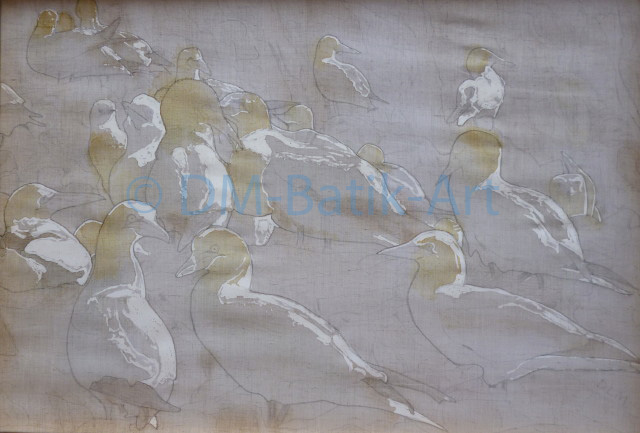 Stage 1
The first application of wax is used to block out any areas of the image which are to be retained as a white colour.
In this picture of a group of gannets, the sunlit areas have been waxed out.
 Stage 2
Using fabric paints and Procion dyes initially, I gradually build up the image starting with the lightest colours first. The process of waxing and dying is repeated with darker colours gradually being introduced.
It is important to always be aware of the colour wheel chart to ensure that colours aren’t inadvertently mixed together. For instance if you apply a yellow dye followed by a blue dye the resulting colour will be green and so you need to ensure that any blue sky areas are blocked off with wax first.
 Stage 3
Eventually when the batik reaches a sufficient stage of completion, I then immerse the batiks within dye baths (using Dylon cold water dyes) starting with light colours first and progressing to darker colour tones with dark blue or black as the final dyes.
I usually crunch the fabric before immersing them into the dyes and this creates random cracks within the wax which allows the respective dyes to penetrate the fabric. This technique produces batik’s distinctive “crackled” effect over the whole image.
 Stage 4
Eventually, the whole surface of the fabric will virtually be covered by wax. Once the final dye has dried, the wax is then removed by sandwiching the fabric between sheets of paper and a hot iron is used to melt the wax which is absorbed by the paper.
I use contemporary rather than traditional techniques and aim to create vibrant colour batik paintings to capture the essence of an image. Batik is a very creative and expressive medium. Whilst the whole process can be very time consuming, the rewards are great and there is always an element of surprise in how they eventually turn out. I usually further refine my images in Photoshop before producing my cards and prints.